
Phone Addiction Symptoms and Signs to Recognize
Common phone addiction symptoms are behavioral, not medical: reaching for the phone without deciding to, checking it before you're even out of bed, losing track of time inside an app, and feeling uneasy when it's not within reach. None of these are a diagnosis on their own — they're a checklist for self-recognition, not a clinical screening tool.
Phone Addiction Symptoms Worth Actually Paying Attention To
These are the patterns people describe most often when they talk about their own habit. You don't need all of them to have something worth changing — even one or two, if they're frequent, are a reasonable signal.
Reaching for It Without Deciding To
One of the clearest phone addiction signs in practice isn't how much you use your phone — it's whether you decided to. A lot of pickups happen on autopilot: you're not choosing to check it, your hand is just already moving before the thought forms. If you regularly find the phone in your hand and can't remember picking it up, that's the reflex operating without you.
Losing Track of Time Inside an App
You open something meaning to spend a couple of minutes, and forty-five minutes later you're still there with no clear memory of the middle part. This is one of the more common symptoms of phone addiction, and it's less about any specific app than about how easy it is to lose your sense of elapsed time once you're a few taps in.
Checking It Before You're Out of Bed
Picking up the phone as the very first act of the day, before you've gotten up, before you've even fully woken up, is a strong version of the reflex — it means the habit runs ahead of any other decision you make that day, including deciding what kind of morning you want to have.
Feeling Uneasy When It's Not Within Reach
Noticing a small pull of unease when you've left the phone in another room, or when the battery is low, is common and worth naming honestly — it's a sign the phone has become a default source of reassurance, not evidence of anything more serious. It doesn't need a clinical label to be worth addressing.
Using It to Avoid a Feeling, Not Just to Pass Time
There's a difference between picking up the phone because you're genuinely bored and picking up the phone specifically to avoid sitting with something uncomfortable — a hard conversation you're putting off, a task you don't want to start, an awkward silence. If the phone is consistently the tool you reach for to not feel something, that's worth noticing separately from ordinary scrolling.
Why This Is a Checklist, Not a Diagnosis
None of the signs above are clinical criteria, and this article isn't a substitute for one. "Phone addiction" as used here is a colloquial, widely understood shorthand for a compulsive habit pattern — closer to the way people talk about being "addicted" to checking email or to a TV show than to a medical condition. Recognizing yourself in this list doesn't mean something is wrong with you; it means you've spotted a habit that's running on autopilot more than you'd like, which is useful information regardless of what you call it.
What to Do If You Recognize Yourself Here
The signs above share a common thread: they're all versions of the phone winning a decision before you got a chance to make it. The fix that tends to work isn't trying harder to notice in the moment — by the time you're aware of the reflex, it's usually already fired. It works better to change what's possible in the first place, especially around the specific moments where the reflex is strongest, like first thing in the morning or last thing before sleep.
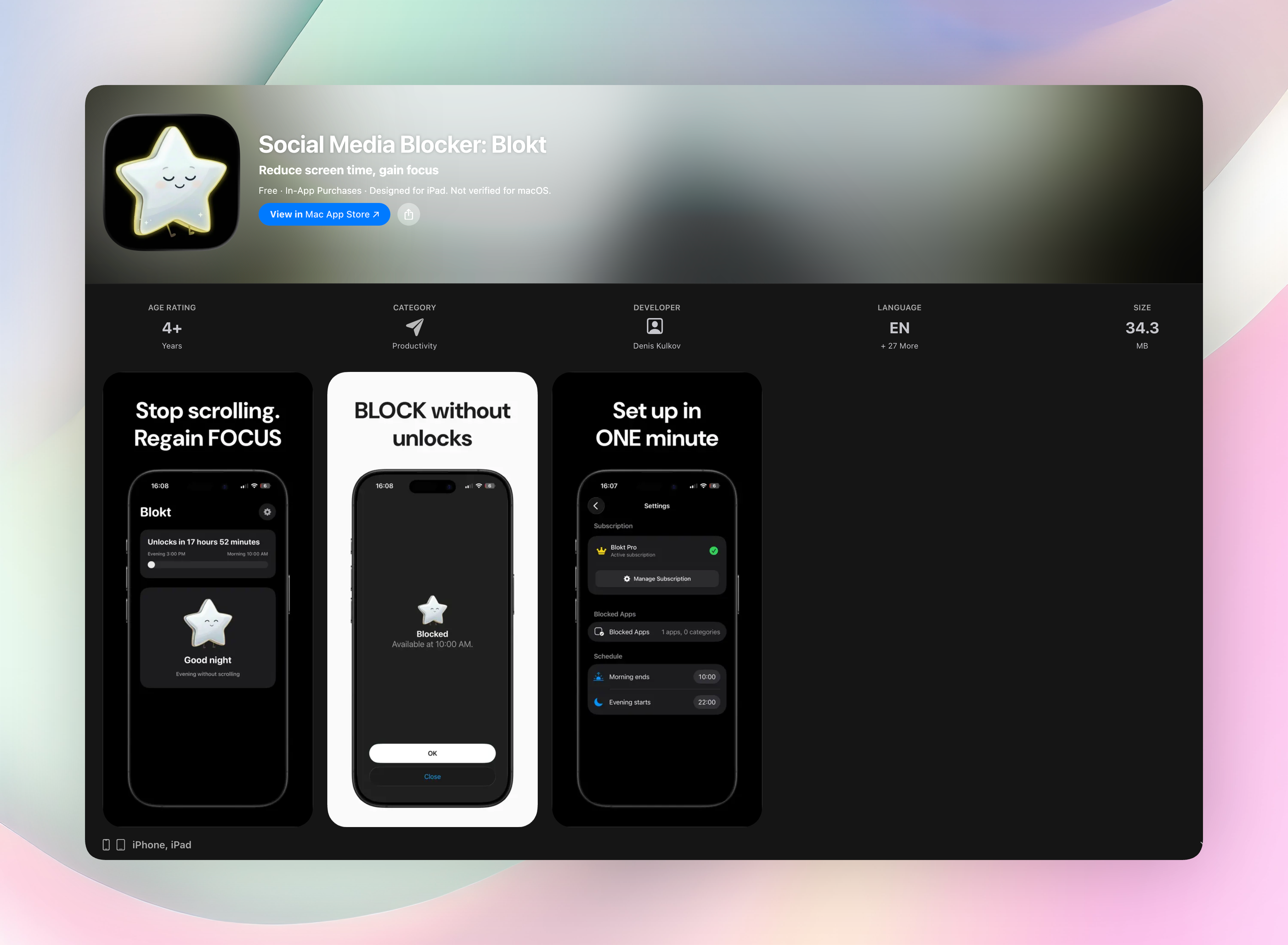
If checking the phone before you're even out of bed or losing an hour to it right before sleep are the signs you recognize most, a scheduled block on the affected apps during that window removes the reflex from the equation entirely rather than asking you to catch it every time. Blokt does this by locking chosen apps or categories between a set evening start and morning end using Apple's Screen Time controls, with no unblock button to reach for in the moment the reflex fires.
For a fuller set of fixes beyond the morning and evening windows, how to break phone addiction covers the broader environment changes — defaults, friction, and what to do with the time you get back.
FAQ
What are the signs of phone addiction?
Reaching for the phone without deciding to, losing track of time once you're in an app, checking it before you're out of bed, and feeling uneasy when it's out of reach are the most commonly described signs. None of these are a diagnosis on their own.
Are phone addiction symptoms the same as being a heavy user?
Not exactly. Heavy use is about volume; these signs are more about control — whether you're deciding to use the phone or just noticing afterward that you did. Someone can use a phone a lot and still feel in control of it, and someone can use it briefly but reflexively.
Is phone addiction a real medical diagnosis?
No. It's a widely used informal term for a compulsive habit pattern, not a clinical diagnosis. That doesn't make the pattern less worth changing — it just means recognizing it doesn't require a medical label.
What's the first sign to pay attention to?
Reaching for the phone without deciding to is usually the most telling one, because it means the habit is running ahead of your intention rather than following it. Most of the other signs follow from that same reflex.
Free Blokt tools
- Phone Addiction TestEstimate how much friction your phone habits create using time, pickups, cut-down attempts, and delayed sleep. See every factor behind your score.
- Social Media Addiction TestReflect on social-feed habits with an original, browser-based score and separate time-control, checking, and interference factors.