
What Is Notification Anxiety?
Notification anxiety is the itch to check your phone because you don't know what's waiting, not because something actually arrived. It shows up as reaching for a phone that hasn't buzzed, or checking an app the moment you're free even though nothing prompted it. It's a common habit, not a diagnosis, and it responds well to a few concrete changes.
What Notification Anxiety Actually Feels Like
The clearest sign is checking a phone that didn't do anything. No buzz, no sound, no badge — you just felt the pull to look, usually in a quiet or unstructured moment. That's different from responding to an actual alert, which is a normal, useful behavior. Notification anxiety is the version where the checking happens on its own schedule, disconnected from whether anything is actually there.
It's worth naming honestly what this is and isn't. It's not a clinical anxiety disorder, and using the word "anxiety" here describes an everyday, low-grade unease — the same category of feeling as checking your pocket for your keys one more time even though you already checked. It's common, it's not evidence that something is wrong with you, and it's very fixable.
Why It's About Not Knowing, Not the Notification Itself
The pull isn't really about wanting to see a specific message. It's about resolving uncertainty — "did something happen while I wasn't looking?" — and checking is the fastest way to close that loop, even when the honest answer is almost always "no, nothing happened." That's part of why the habit is so persistent: an uncertain outcome pulls at attention more than a settled one does, so "probably nothing, but I don't know for sure" keeps drawing you back more effectively than either "definitely something" or "definitely nothing" would.
Compulsive Phone Checking Without a Notification at All
For a lot of people, the habit eventually detaches from notifications completely. You stop needing a badge or a buzz to trigger the check — the check becomes a reflex tied to specific moments instead, like sitting down, standing up, or a lull in conversation. At that point, compulsive phone checking isn't really about missing something anymore; it's just what your hands do during any unfilled second, and the "did I miss something" story is more of an after-the-fact explanation than the actual cause.
Fixes That Actually Help
Turn Off Badges and Non-Essential Alerts
A badge is a small, constant, visible claim that something needs your attention, whether or not it actually does. Turning off badges for anything that isn't genuinely time-sensitive removes one of the most direct visual triggers for checking — there's simply nothing on the home screen inviting the look.
Batch Your Notifications
Rather than letting alerts arrive continuously throughout the day, batching them into a couple of set times — say, once mid-morning and once in the early evening — turns dozens of small "check now" prompts into two predictable ones. Most phones support some version of scheduled or summarized notifications; the exact setting varies by device, but the underlying idea works regardless of which phone you use.
Scheduled Silence Windows
Batching and badge changes reduce the pull throughout the day, but the fear of missing a notification tends to spike hardest in one specific window for most people: the evening, when there's nothing else to fill the quiet and no clear reason not to check. A scheduled window where the apps simply aren't reachable removes the uncertainty loop entirely, because there's nothing to check even if the urge shows up.
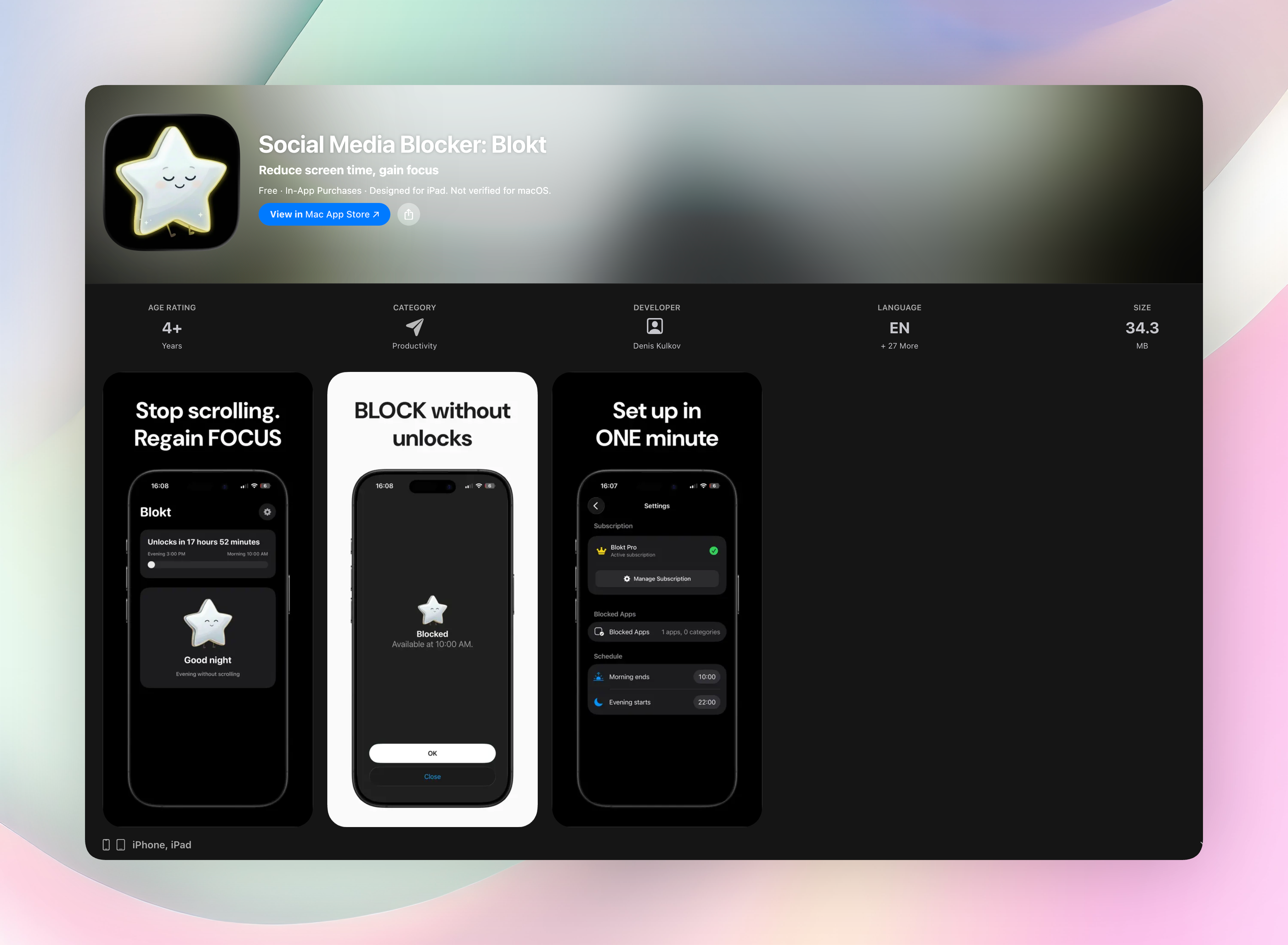
Blokt works this way for a set evening-to-morning window: you choose the apps or categories, set a start and end time, and it blocks them using Apple's Screen Time controls with no unblock button — so the "did I miss something" loop has nowhere to resolve itself during that window.
If the habit has spread past specific triggers into a general reflex throughout the day, how to break phone addiction covers the wider set of environment changes worth making.
FAQ
What is notification anxiety?
The urge to check your phone because you don't know whether something arrived, rather than because it actually did. It's a common habit tied to resolving uncertainty, not a clinical condition.
Why do I check my phone even when it hasn't buzzed?
Usually because the checking has become a reflex tied to a moment — sitting down, a lull in conversation — rather than a response to an actual alert. The uncertainty of not knowing pulls harder than either a confirmed alert or confirmed silence would.
How do I stop compulsive phone checking?
Turn off badges and non-essential alerts to remove the visual trigger, batch notifications into set times instead of a constant stream, and add a scheduled window where the phone simply isn't reachable for the time you struggle with most.
Is fear of missing a notification a sign of a bigger problem?
Not on its own. It's a common, low-grade habit that responds well to changing your notification setup and adding structure around your worst window, usually the evening.
Free Blokt tools
- Phone Addiction TestEstimate how much friction your phone habits create using time, pickups, cut-down attempts, and delayed sleep. See every factor behind your score.
- Social Media Addiction TestReflect on social-feed habits with an original, browser-based score and separate time-control, checking, and interference factors.